Everyone’s using AI. Almost no one’s getting results they want.
You’ve seen the demos. AI writes code, generates content, answers support tickets. It looks effortless. So you sign up, try a few prompts, get mediocre output, and conclude AI isn’t ready for prime time.
The problem isn’t the technology. It’s how you’re using it.
Most founders treat AI like a calculator. Input request, get perfect output. No context needed, no feedback required, no relationship to build.
But gen AI doesn´t work like that. You asked for “a blog post about our product” and got generic fluff. You uploaded a document and asked for “insights” without explaining what kind of insights or why they matter. The output felt dull because you gave AI nothing to work with.
Then you decided AI wasn’t worth the hype. Meanwhile, your competitors figured out the real trick.
AI isn’t a calculator. It’s more like hiring a smart intern who knows everything but understands nothing about your business.
That intern needs context. They need feedback. They need coaching. Most importantly, they need you to care enough to make them better at their job.
The companies seeing real results treat AI like a teammate, not a tool. They invest time in training it, just like they would train a human. The difference is this teammate works around the clock and never asks for a raise.
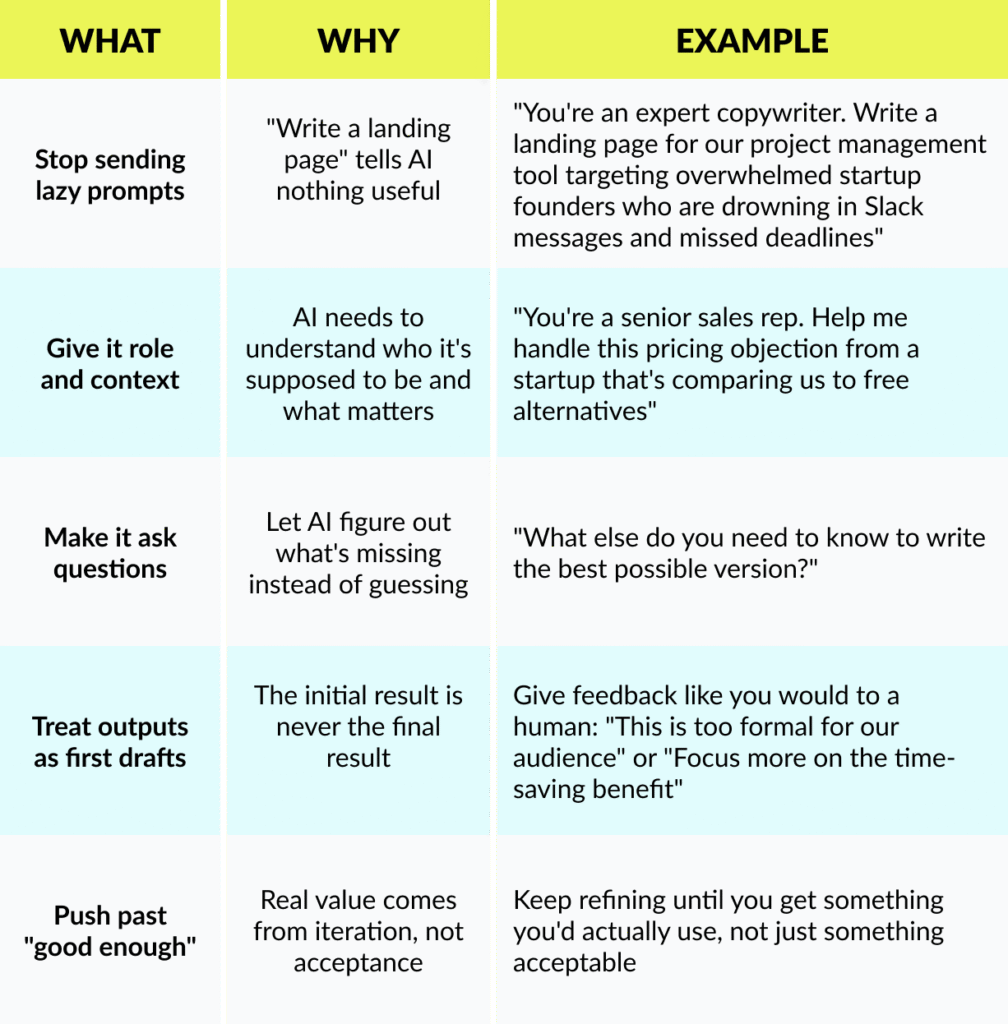
Done right, AI collaboration feels different. Instead of fighting the tool, you’re working with a partner who gets smarter every interaction.
Some founders use AI to stress-test big decisions. They feed it context about hiring choices, vendor selections, or strategic pivots, then ask it to argue the other side. Decisions get better when someone always plays devil’s advocate.
Others turn AI into their research assistant for competitive analysis. They feed it competitor websites, funding news, and job postings, then ask for strategic implications. Market intelligence becomes automated when AI connects dots you don’t have time to find.
This isn’t about being an AI power user with a computer science degree. It’s about recognizing that coaching AI is faster than doing everything yourself.
Most founders are still figuring out prompts while others have moved on to building AI into their actual workflows.
The difference isn’t technical skill or budget. It’s recognizing that AI needs the same investment you’d make in any new team member. Context, feedback, iteration.
Companies that treat AI like software get software results. Companies that treat AI like a thinking partner get thinking partner results.
The technology isn’t the barrier anymore. Your approach is.